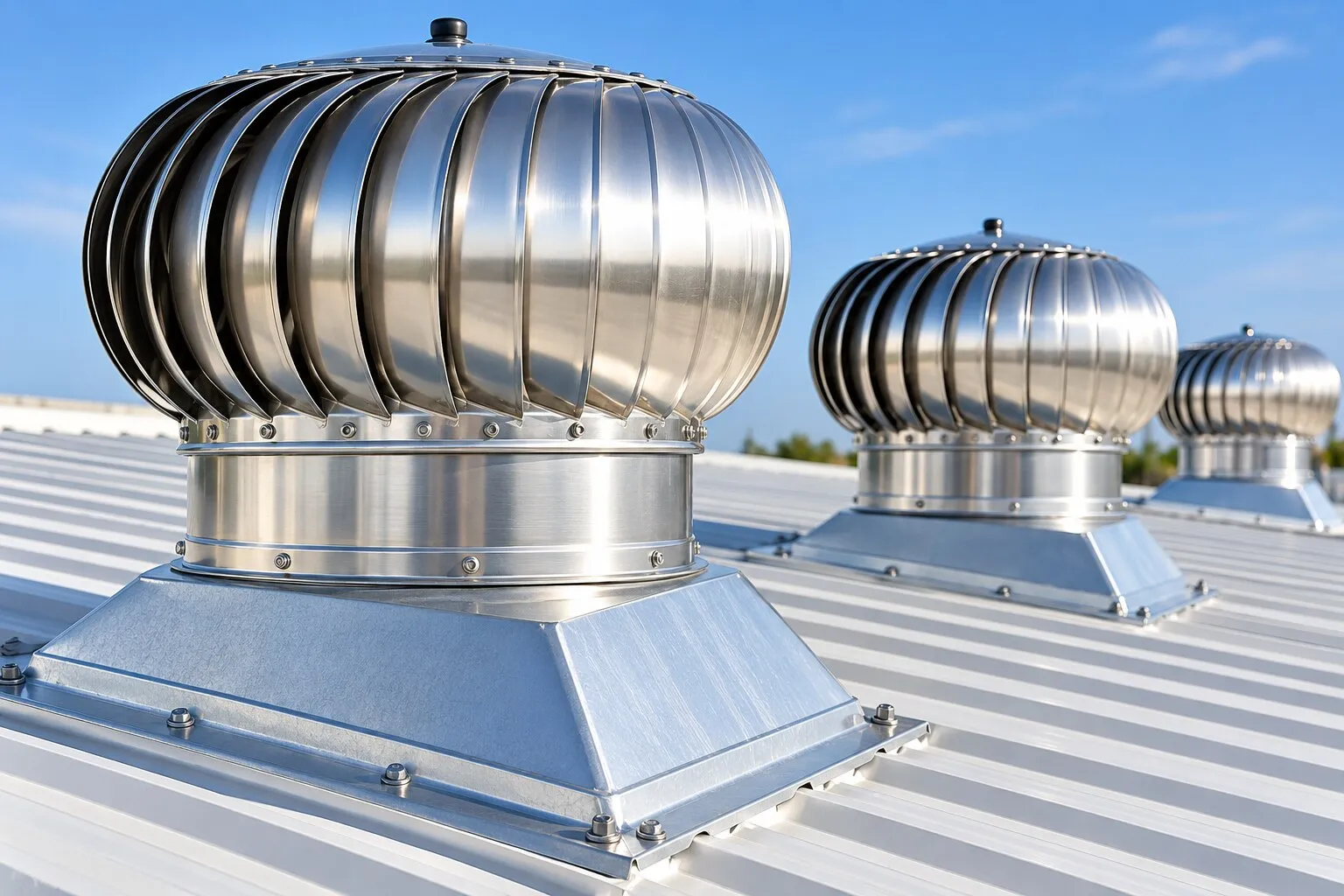
A turbo air ventilator can keep spinning while dust, blocked screens, worn bearings or a failed roof seal quietly reduce its performance. By following a Nagpur-specific inspection cycle, cleaning method and fault checklist, you can decide whether to clean, lubricate, repair or replace each component without creating a roof-access or leakage hazard.
Key takeaways
- Inspect before the pre-monsoon, after the monsoon and before peak summer heat.
- Use a soft brush and low-pressure water; keep water away from bearings.
- Check free rotation, shaft play, vanes, fasteners and roof flashing for faults.
- Replace the ventilator when corrosion, bearing wear or structural damage exceeds repair value.
Build a seasonal inspection schedule for Nagpur roofs
Use a seasonal schedule rather than one fixed annual date for turbo air ventilators for care requirements in Nagpur. Nagpur’s hot, dusty pre-monsoon months, southwest monsoon and changing wind conditions create different failure risks.
1. Before the southwest monsoon, complete a detailed roof inspection. Check dust loading, thermal movement, loose fasteners, cracked sealant and corrosion at cut edges, roof openings and exposed steel.
2. During hot, dusty summer conditions, increase visual checks where trucks, cement handling, metal processing or unpaved yards release airborne residue. Inspect more frequently than a clean, low-dust site.
3. After the monsoon, inspect drainage and the roof interface. Look for blocked outlets, water leakage, rust, damaged washers and corrosion around the base collar, flashing and roof opening.
4. After unusually strong wind or hail, inspect immediately for bent turbine blades, shifted flashing, loose rivets, lifted roof sheets and impact marks. Shorten the interval further where high humidity, bird activity, industrial fumes, coastal exposure or chemical residues accelerate damage.
Record every visit in a log showing the roof zone, inspection date, weather event, photographs and defects found. Compare similar ventilators under the same conditions. Passive units depend on wind and stack effect, so reduced airflow during calm weather is not automatically a maintenance fault; verify obstructions and mechanical damage before raising a repair.
Clean the turbine without damaging the roof or bearing
A safe cleaning sequence starts with roof access, not the turbine. Follow the site fall-protection plan, use designed walkways, crawl boards or other load-distribution equipment, and never step on polycarbonate sheets, skylights or fragile roof panels.
Do not use the cowl, neck or base as a handhold or anchor unless it is designed and certified for that purpose.
1. Isolate nearby powered exhaust fans, conveyors and roof equipment under the site lockout procedure. A passive turbine has no electrical isolation point, but surrounding machinery can start unexpectedly.
2. Remove loose dust, bird nests, feathers and insect material with a soft brush or low-pressure air. Do not pull material through the bearing area or force debris into the throat.
3. Wash the blades, housing, throat and removable bird or insect screen with clean water and mild, non-abrasive detergent. Keep high-pressure water away from bearings, laps, flashings and sealant joints.
4. Avoid abrasive pads, petrol, diesel, strong alkaline cleaners and aggressive solvents. Check chemical compatibility before cleaning beside polycarbonate; solvent attack can cause crazing and cracking that appears later.
5. Rinse without directing a jet into the assembly, then dry the turbine and roof interface fully. Moisture trapped at a lap or sealant joint can become a leak path.
6. Refit the screen and guards, then check for damage, obstruction, loose parts and free rotation. These steps form the core turbo air ventilator cleaning requirements and prevent cleaning from creating a bearing or roof failure.
Inspect the moving parts and diagnose airflow faults
A dirty ventilator usually has normal blade movement but reduced airflow; a mechanical or structural fault changes how the turbine moves, sounds or sits. During industrial ventilator care in Nagpur, inspect each blade for bends, dents, cracks, sharp distortion and contact with the cowl.
Check the central spindle, bearing area, rivets and fasteners for looseness, then look for axial or radial play.
Isolate nearby powered equipment before rotating the turbine by hand. It should turn smoothly without scraping, grinding, tight spots or intermittent stopping. Stopping after the wind drops is normal; resistance, an abrupt stop after a short turn or grinding indicates obstruction, seizure or bearing damage.
| Fault type | What you observe | What to check |
|---|---|---|
| Dirty or restricted | Turbine turns normally but airflow is weak | Roof opening, throat, screen, dust, nests and corrosion flakes |
| Mechanical | Grinding, tight rotation, short free-spin or wobble | Bearing, spindle, blade damage, rivets, fasteners and cowl contact |
| Structural | Turbine sits off-centre or rubs the cowl | Base, flashing, roof opening and shifted mounting |
| Weather-related airflow loss | Several units behave alike in calm conditions | Wind speed and indoor–outdoor temperature difference |
Compare several similar units under the same wind conditions. Higher starting resistance, shorter free-spin time, abnormal noise or visible wobble identifies a suspect unit even when it still rotates. A finer replacement mesh can reduce free area, so record reduced airflow only after checking obstructions and recognising that passive ventilation falls in calm weather.
Choose between cleaning, lubrication, repair and replacement
A sound turbine needs cleaning, not automatic oiling. Match the defect to the remedy before touching the assembly.
| Action | Defect or condition | Required response |
|---|---|---|
| Clean | Dust, droppings or blocked screen; blades and bearings sound | Dry-brush or use low-pressure air, then mild detergent and clean water |
| Lubricate | Manufacturer names the lubricant, access point and interval | Use the specified light machine oil or grease; keep it off dry-running parts |
| Repair | Bent blade, loose rivet, damaged fastener, failed washer or deformed screen | Replace the damaged part or repair it; do not force it back into service |
| Replace | Rotation stays tight, noisy or wobbly after obstruction removal | Replace the bearing or complete turbine assembly |
| Reseal | Failed roof joint, open side lap or damaged flashing | Clean, dry and de-rust the joint, then apply compatible sealant |
| Touch up | Scratch, cut edge or exposed hole in colour-coated steel | Use the specified roof coating system, never arbitrary paint or bitumen |
Many turbine ventilators have sealed bearings designed for replacement. Drilling the seal or oiling an exposed spindle attracts dust and contaminates the bearing.
Inspect the flashing, base collar, sealant, side laps and ventilator-to-roof-sheet connection. Do not reseal wet, dusty or corroded surfaces; check compatibility with the roof coating and adjacent polycarbonate first.
Turbo air ventilator maintenance in Nagpur includes roof-access hazards. Trained professionals should handle sheet replacement, fall protection and repairs near fragile panels.
Verify the repair and specify a maintenance-ready installation
Repair acceptance starts with a controlled operating and leak check, not a visual glance from the roof edge.
1. Confirm that the turbine clears the roof and turns without blade wobble, scraping or abnormal play. Check the cowl, blades, central spindle, fasteners and rivets, then refit every guard and screen removed during the work.
2. Inspect the roof sheet, base collar, flashing and sealant joint for a new crack, puncture, lifted edge or damaged coating. A repair that leaves a fresh hole has not restored safe operation.
3. Run a controlled hose test over the flashing and roof penetration. Use enough water to confirm shedding, never a high-pressure jet into the ventilator or toward bearings and laps. Inspect the interior below for leakage after the test.
4. Compare similar units in the same wind. Record starting resistance, free-spin behaviour, noise, visible axial or radial play, airflow complaints, date, roof zone and photographs. This creates a useful trend for critical production areas.
5. Record the bearing type, approved lubricant, screen size, compatible sealant and replacement parts in the handover document. Lubricate only when the manufacturer specifies the lubricant, access point and interval; sealed bearings often require replacement rather than oiling.
RSR Steel Pvt. Ltd. can help define inspection details where a repair crosses roof-mounted ventilation, colour-coated steel, adjacent polycarbonate or pre-engineered building access, rather than supplying a unit alone.
Keep maintenance separate from design: a passive turbine cannot guarantee air changes in calm weather. Nominal throat diameter and advertised displacement do not replace a ventilation calculation for heat, fumes or process hazards, including industrial ventilator care in nagpur.
Related product
 | Turbo Air Ventilators RSR Steel Pvt. Ltd. supplies high-performance Turbo Air Ventilators designed to ensure effective natural ventilation in industrial and commercial... View product → |
Frequently asked questions
How often should you inspect turbo air ventilators on a Nagpur industrial roof?
Inspect before the hot, dusty pre-monsoon period, after the southwest monsoon and before peak summer heat. Add an inspection after severe wind or heavy rain.
What are the turbo air ventilator cleaning requirements?
Remove dust with a soft brush or vacuum, wash with low-pressure water and prevent water from entering the bearing. Do not stand on the turbine or use abrasive tools.
How do you diagnose an airflow fault in a turbo air ventilator?
Check whether the turbine spins freely, then inspect blocked vanes, bent blades, loose fasteners, shaft play, bearing noise, roof openings and internal obstructions.
When should you repair or replace an industrial turbo air ventilator?
Clean and lubricate when dust or dry bearings cause the fault. Repair loose fasteners, minor corrosion and damaged flashing. Replace the unit when blades, bearings, shaft or frame have severe corrosion or structural damage.
How can you verify a turbo air ventilator repair?
Confirm free rotation, quiet operation, secure fasteners, intact flashing and no roof leaks. Recheck airflow and vibration after the ventilator runs under normal wind conditions.
Keywords