An existing industrial roof cannot be upgraded safely from its floor area or sheet thickness alone. You need to establish whether the structure, drainage and fixing points can accept polycarbonate, then compare a retrofit quotation against the exact profile, load and installation details required.
Key takeaways
- Inspect purlins, rafters, drainage and fixing points before ordering panels.
- Choose insertion, partial replacement or full replacement based on roof condition.
- Match the profile, thickness and fixings to the existing roof system.
- Demand panel specifications, installation scope, warranty terms and exclusions in writing.
Can the existing roof carry a polycarbonate upgrade?
A roof can carry a polycarbonate upgrade only after its structure, drainage and fixing points pass inspection. Polycarbonate is an enclosure and daylighting component, not a repair for defective purlins, rafters or corroded supports.
1. Photograph every roof bay from inside and outside, including ridges, eaves, gutters, penetrations, openings and existing translucent panels. Mark active leaks, cracked sheets, ponding and areas with visible deflection.
2. Record purlin spacing, rafter spacing, roof slope and sheet support locations. Trace the actual load path from the proposed fixing points through purlins and rafters to the main frame; do not assume the roof cladding carries the load safely.
3. Inspect for section loss, corrosion, loose or missing fasteners, distorted members and unsupported edges. Identify fixing points that remain sound, plus edge and corner zones exposed to higher wind suction. Check wind uplift using roof geometry and IS 875 (Part 3), not a fastener-count rule.
4. Check hot-season movement and monsoon drainage for an industrial roof upgrade in Nagpur. Confirm that water has a defined path through the slope, laps, gutters and downpipes; exposed sealant cannot correct trapped water.
5. If the roof is asbestos-cement, stop before drilling, breaking or dry-cutting. Require a removal method, worker protection, sealed waste packaging and an approved disposal route before accepting a quotation for replacement.
Should you insert panels, replace part of the roof or replace it all?
A sound roof with a clear daylighting gap does not need wholesale replacement. Match the retrofit scope to the roof’s condition:
| Option | Use it when | Main risk |
|---|---|---|
| Translucent strips | Opaque sheets, purlins and fasteners are sound, but interiors need daylight | Poor side-lap engagement can leak |
| Partial replacement | Specific bays have failed sheets, leaks or inadequate daylight | Colour, profile and closures may not match |
| Complete replacement | Corrosion, leaks, incompatible profiles or widespread deflection make patching uneconomic | Temporary protection, access and disposal increase the work |
Measure the roof itself, not the floor area. Record each slope, sheet run, roof fall, purlin spacing, ridge and eave line, side-lap and end-lap direction, openings, gutters and flashing lengths.
- Record nominal width and effective cover width separately.
- Calculate sheet lengths to the purlin and support layout, including movement allowance.
- Mark every ridge cap, barge flashing, eave closure, penetration flashing and transition to the old roof.
- Photograph ponding, unsupported edges, damaged laps and fastener lines.
A polycarbonate roof replacement in Nagpur must match the existing metal profile, not merely resemble its corrugation. A near-match can leave unsupported edges, incompatible closures and leakage at side laps or the transition to old sheets. Specify the exact profile before pricing.
If asbestos-cement sheets are present, stop ordinary replacement planning: drilling or breaking them requires controlled removal, worker protection, sealed packaging and an approved disposal route.
Which polycarbonate profile and specification suits the building?
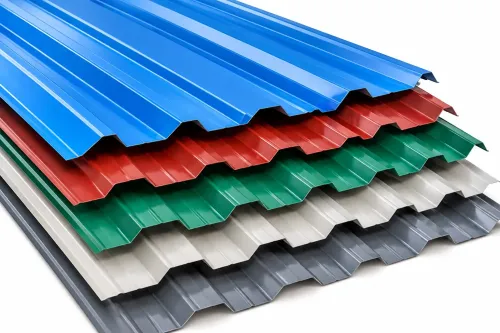
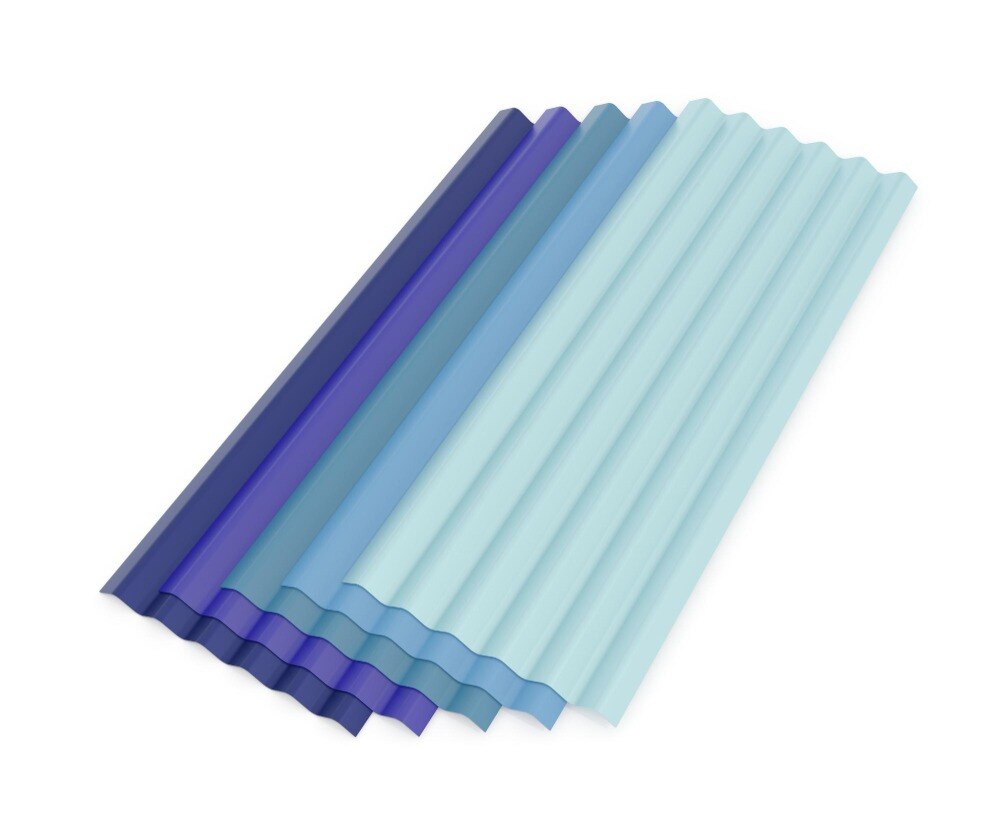
Choose the sheet by the roof interface and indoor climate, not by thickness alone. Solid sheets suit impact exposure and a clear appearance; multiwall sheets reduce heat flow and weight; corrugated or other profiled sheets suit roofs that must align with metal sheeting and span between existing supports.
| Option | Main advantage | Trade-off and suitable use |
|---|---|---|
| Solid | Clear appearance; strong impact resistance | Heavier and higher heat gain; useful near impact-prone areas |
| Multiwall | Lower heat flow and lighter weight | More limited detailing and visibility; useful for daylighting |
| Profiled | Matches corrugated metal and existing support lines | Profile-specific laps, closures and spans; useful for roof inserts or replacement |
For a warehouse, factory or workshop, maximum visible-light transmission can create glare and heat gain during Nagpur’s hot season. Opal or solar-control grades reduce those loads but admit less daylight; occupied commercial areas need the lighting and cooling balance checked.
Ask the polycarbonate sheets supplier in Nagpur for roof upgrades to state:
- Thickness, profile depth, nominal and effective cover width, mass and UV-facing side
- Allowable span, design load, support spacing and fixing pattern
- Visible-light transmission, solar-control performance and colour
- Load tables for the exact profile and thickness across the service-temperature range
- Tested fire classification and certificate for the supplied formulation
Polycarbonate is not inherently fireproof. Reject a thickness-only comparison and any unqualified “fire-rated” claim; the exact formulation, profile and test classification control performance.
What installation details prevent cracks and leaks?
A 10 m polycarbonate sheet can move about 39 mm through a 60°C temperature change: 65 × 10⁻⁶/K for polycarbonate produces far more movement than steel’s roughly 12 × 10⁻⁶/K. Treat the sheet as a moving panel, not as steel roofing.
Use correctly sized clearance holes, compatible fasteners and sealing washers. Tighten fasteners only until the washer seals; excessive pressure crushes the sheet, distorts ribs and starts cracks around holes. Keep the co-extruded UV layer facing outward, as marked by the manufacturer.
Detail every junction so movement and water have somewhere to go:
- Orient side laps and end laps with the drainage direction.
- Fit compatible closures at open profiles.
- Allow movement at ridge caps and barge flashings.
- Connect the sheet to gutters without blocking the discharge path.
- Flash penetrations and changes of roof plane instead of relying on a bead of sealant.
Provide positive roof fall and a defined water path between the old roof and the new sheet. Exposed sealant cannot correct trapped water; ageing sealant can hide ponding until the roof leaks.
Check compatibility before installation. Require written recommendations or test evidence for sealants, gaskets, paints, insulation facings, PVC components and preservative-treated timber. Unsuitable materials can stain polycarbonate, destroy its seal or cause stress cracking.
Verify wind uplift under IS 875 (Part 3), including edge and corner zones where suction rises. Never permit direct foot traffic. Use walk boards or load-spreading platforms supported by the structure.
What should you demand from a Nagpur supplier’s quotation?
Compare a polycarbonate sheets supplier in nagpur for roof upgrades on measured performance and interface details, not catalogue thickness or price per sheet. Demand a quotation that identifies:
- Exact profile, sheet mass, nominal and effective cover width, thickness, colour, visible-light transmission and solar-control data.
- UV-face identification, allowable span and load tables for the stated supports, fixing pattern, service-temperature range and thermal-expansion clearances.
- Fire classification and certificate, compatibility recommendations, warranty exclusions and replacement-sheet availability.
- The outward-facing side marked on drawings, with side-lap, end-lap and flashing engagement shown against the existing roof profile.
| Quotation evidence | What it must show | Why it matters |
|---|---|---|
| Site survey | Measured roof drawing, purlin spacing, slope, corrosion, deflection and leaks | Exposes repair work hidden by a panel price |
| Drainage and wind design | Gutters, falls, water paths and wind-uplift assumptions | Prevents leakage and under-designed edge fixings |
| Scope schedule | Included closures, ridge caps, flashings, fasteners and sealants | Stops essential accessories becoming variations |
| Existing-sheet work | Separate prices for structural repairs, asbestos removal and access equipment | Keeps hazardous or enabling work visible |
RSR Steel Pvt. Ltd. is worth comparing at this stage only if its engineered submission answers these measurable questions. Ask it to separate sheet supply from structural repairs, hazardous-material removal and access work; otherwise the quotation cannot make the complete roof interface accountable.
Related product
 | Polycarbonate Sheets RSR Steel Pvt. Ltd. offers premium-quality Polycarbonate Sheets known for their high strength, clarity, and durability. View product → |
Frequently asked questions
Can an existing roof carry a polycarbonate upgrade?
Only after checking the purlins, rafters, supports, drainage paths and fixing points. Polycarbonate does not correct corroded steel, defective structure or failed roof drainage.
Should you insert panels, replace part of the roof or replace it all?
Insert panels when the existing roof remains sound and you need daylighting. Replace part of the roof when damage is localised. Choose full replacement when corrosion, leaks or structural defects affect large areas.
Which polycarbonate profile and specification suits the building?
Match the sheet profile to the existing roof geometry, purlin spacing, required daylight area and environmental exposure. Confirm thickness, UV protection, fire performance and compatibility with the fixing system.
What installation details prevent cracks and leaks?
Use the correct washers and fasteners, pre-drill holes to allow thermal movement, avoid overtightening, maintain the required end and side laps, and seal penetrations without blocking drainage.
What should you demand from a Nagpur supplier’s quotation?
Request the panel profile, thickness, dimensions, UV and fire specifications, quantity, accessories, installation scope, delivery terms, warranty, exclusions and the treatment of dismantled roofing.
Keywords