An Electric Overhead Traveling (EOT) crane is one of the most valuable material handling systems used in manufacturing plants, warehouses, fabrication units, and heavy engineering industries. The right crane improves productivity, enhances workplace safety, and enables efficient movement of heavy loads. However, selecting an unsuitable crane can lead to operational delays, increased maintenance costs, and safety concerns.
As industrial development continues to grow across Nagpur and Maharashtra, businesses are investing in advanced lifting equipment that supports higher production demands. RSR Steel Pvt. Ltd. works with industrial infrastructure solutions that help businesses create efficient manufacturing environments, making it important to understand the factors that influence EOT crane selection.
What Is an EOT Crane?
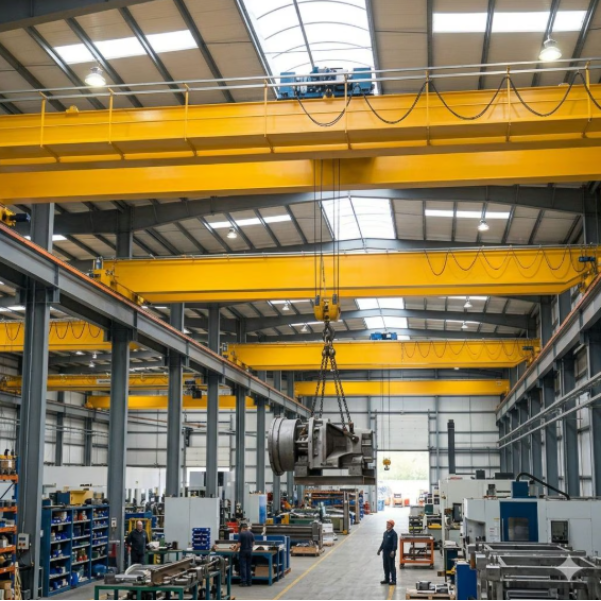
An EOT crane is a bridge crane that travels along overhead rails installed inside an industrial building. It is designed to lift, move, and position heavy materials with precision while reducing manual handling.
These cranes are commonly found in:
- Steel fabrication plants
- Engineering workshops
- Automobile manufacturing units
- Warehouses
- Cement plants
- Power generation facilities
- Construction material industries
Their ability to transport heavy loads efficiently makes them an essential part of many industrial operations.
Why Choosing the Right Crane Matters
An EOT crane is a long-term investment. The correct system not only improves operational efficiency but also contributes to safer workflows.
A properly selected crane can help:
- Reduce manual labour
- Increase production speed
- Improve material handling accuracy
- Minimise workplace accidents
- Lower equipment downtime
- Support future production expansion
Selecting a crane based only on purchase cost often leads to compromises in performance.
Important Factors to Consider Before Buying
Load Capacity
One of the first considerations is the maximum weight the crane will handle.
Choosing insufficient capacity can create safety risks, while excessive capacity may increase project costs unnecessarily.
Span Length
The span refers to the distance between crane rails.
The crane should be designed according to the building's structural dimensions and workflow requirements.
Lifting Height
The required lifting height depends on:
- Building height
- Storage systems
- Machine layout
- Material stacking requirements
Accurate planning ensures smooth operations.
Duty Cycle
Different industries use cranes at varying frequencies.
For example:
- Light-duty workshops
- Medium-duty fabrication plants
- Heavy-duty steel manufacturing units
Selecting a crane designed for the intended workload extends equipment life.
Single Girder vs Double Girder
Both designs have their own advantages.
Single Girder Cranes
Suitable for:
- Medium loads
- Lower installation costs
- Smaller industrial buildings
Double Girder Cranes
Preferred for:
- Heavy lifting
- Larger spans
- Higher lifting heights
- Continuous industrial operations
Project requirements determine which option offers better value.
Safety Features to Prioritise
Modern EOT cranes should include reliable safety mechanisms.
Look for features such as:
- Overload protection
- Emergency stop systems
- Limit switches
- Anti-collision mechanisms
- Reliable braking systems
- Smooth lifting controls
Investing in safety helps protect both workers and valuable equipment.
Questions Buyers Should Ask
Before finalising a purchase, consider asking:
- What is the crane's rated capacity?
- Is it suitable for future expansion?
- How often will maintenance be required?
- Are spare parts readily available?
- Does the design comply with applicable industrial standards?
- Can the crane integrate with existing infrastructure?
These questions help avoid unexpected operational challenges.
Installation Planning Is Equally Important
Even the highest-quality crane cannot perform efficiently if the supporting building structure is not designed correctly.
Industrial sheds should be planned with appropriate:
- Column spacing
- Crane beams
- Foundation strength
- Structural steel design
- Load distribution
This is why coordination between structural engineers, contractors, and equipment suppliers is essential during project planning.
Long-Term Value Over Initial Cost
An EOT crane should be evaluated based on its total lifecycle value rather than only the purchase price.
Reliable equipment generally offers:
- Lower maintenance expenses
- Longer operational life
- Better workplace safety
- Reduced production interruptions
- Improved return on investment
Businesses that prioritise quality often experience fewer operational issues over the years.
Choosing a Reliable Industrial Partner
Industrial projects require coordinated planning between structural components, lifting systems, and building design. Companies such as RSR Steel Pvt. Ltd. support industrial infrastructure projects by helping businesses integrate dependable solutions that match operational requirements. For industries across Nagpur and Maharashtra, selecting the right EOT crane is not simply about lifting heavy materials—it is about improving efficiency, ensuring worker safety, and creating a facility capable of supporting long-term growth.