A leaking or cloudy roof panel is not automatically a replacement job, and a new sheet will not solve blocked drainage, failed washers or restrained thermal movement. By the end, you will be able to inspect the damage, choose repair or replacement, compare materials and record the specifications needed for a reliable order and installation.
Key takeaways
- Inspect both roof faces and classify damage before ordering materials.
- Repair isolated cracks; replace panels with widespread brittleness, leaks or failed fixings.
- Record panel profile, length, width, overlap, thickness and fixing positions.
- Verify washers, end closures, expansion clearance and watertight laps after installation.
How do you inspect a damaged polycarbonate roof sheet in Nagpur?
Inspect the sheet from above and below, then classify each symptom as local damage, an installation defect or wider failure. For polycarbonate sheets problem requirements in Nagpur, use this sequence:
- Check cracks, punctures and edge splitting, especially beneath trees, hail-impact zones and exposed roof edges.
- Check loose fasteners, crushed or failed EPDM washers, radial cracks and greater movement at edge and corner fasteners, which face higher uplift than field fasteners.
- Look for yellowing, chalking, brittle edges, waviness, condensation, algae and water stains below side laps, penetrations and panel ends.
- Record thermal noise or panel movement without calling it product failure: restrained clearance holes, tight perimeter channels and over-tightened screws can create both.
| Symptom | Likely classification | What to check |
|---|---|---|
| Small puncture away from a fixing or support | Local repair | Clean, dry area; compatible patch and sealant suitability |
| Crack reaching a hole, edge, support or panel end | Wider sheet failure | Replace the sheet; patching will not restore strength or sealing |
| Loose screw, flattened washer, waviness or rattling | Installation defect | Clearance hole, channel restraint, washer compression and screw torque |
| Yellowing, chalking, edge splitting and repeated brittle cracks | Wider ageing failure | Compare adjacent panels; replace the roof run or elevation if symptoms spread |
Nagpur’s direct sun can heat sheets far above ambient temperature, while June–September rain exposes blocked gutters, open multiwall flutes, failed side laps, low slope and ponding. Inspect these drainage details before blaming the panel; a leak often starts in the roof assembly, not the sheet.
When should you repair a polycarbonate sheet, and when should you replace it?
Repair a sheet only when the damage is small, isolated and away from every screw hole, support line, edge and panel end. Clean and dry the area, apply a compatible polycarbonate repair patch with neutral-cure sealant, and replace the damaged washer with a correctly sized EPDM-backed washer.
A crack that reaches a fixing hole or support line is a replacement item. A patch can stop water temporarily, but it cannot restore impact resistance, weather sealing or structural capacity.
Replace the roof run or elevation, rather than one panel, when adjacent sheets show the same ageing:
- Widespread yellowing, chalking or loss of transparency
- Brittle or splitting edges
- Radial cracks around fasteners
- Hard, flattened or deeply compressed washers
- Repeated punctures or panel movement
For polycarbonate sheets repair requirements in Nagpur, compare the repair material with the sheet manufacturer’s chemical-resistance guidance before application.
| Material | Use | Check before use |
|---|---|---|
| Manufacturer-approved flashing detail | Seals penetrations and junctions | Follow the sheet maker’s profile and fixing detail |
| Compatible repair tape | Covers a small, dry puncture | Confirm polycarbonate compatibility and UV resistance |
| Neutral-cure sealant | Seals a patch or washer edge | Verify it is not solvent-based or aggressive silicone |
| EPDM-backed washer | Restores sealing at a fastener | Match its diameter and thickness to the screw |
Do not use solvent cleaners, solvent-based sealants, bitumen compounds, incompatible PVC products or unapproved tapes. Avoid metal tools that scratch the sheet or create stress-crack starting points. If the sheet is brittle, patching is a false economy.
Which replacement sheet type and roofing material fits the repair?
Match the replacement to the existing roof profile first; a thicker sheet with the wrong rib geometry can miss the purlin, fail at the side lap and leak. A polycarbonate sheets requirements comparison in Nagpur must also record slope and drainage defects, because blocked closures, undersized gutters and ponding will defeat any new panel.
| Option | Main advantage | Selection checks |
|---|---|---|
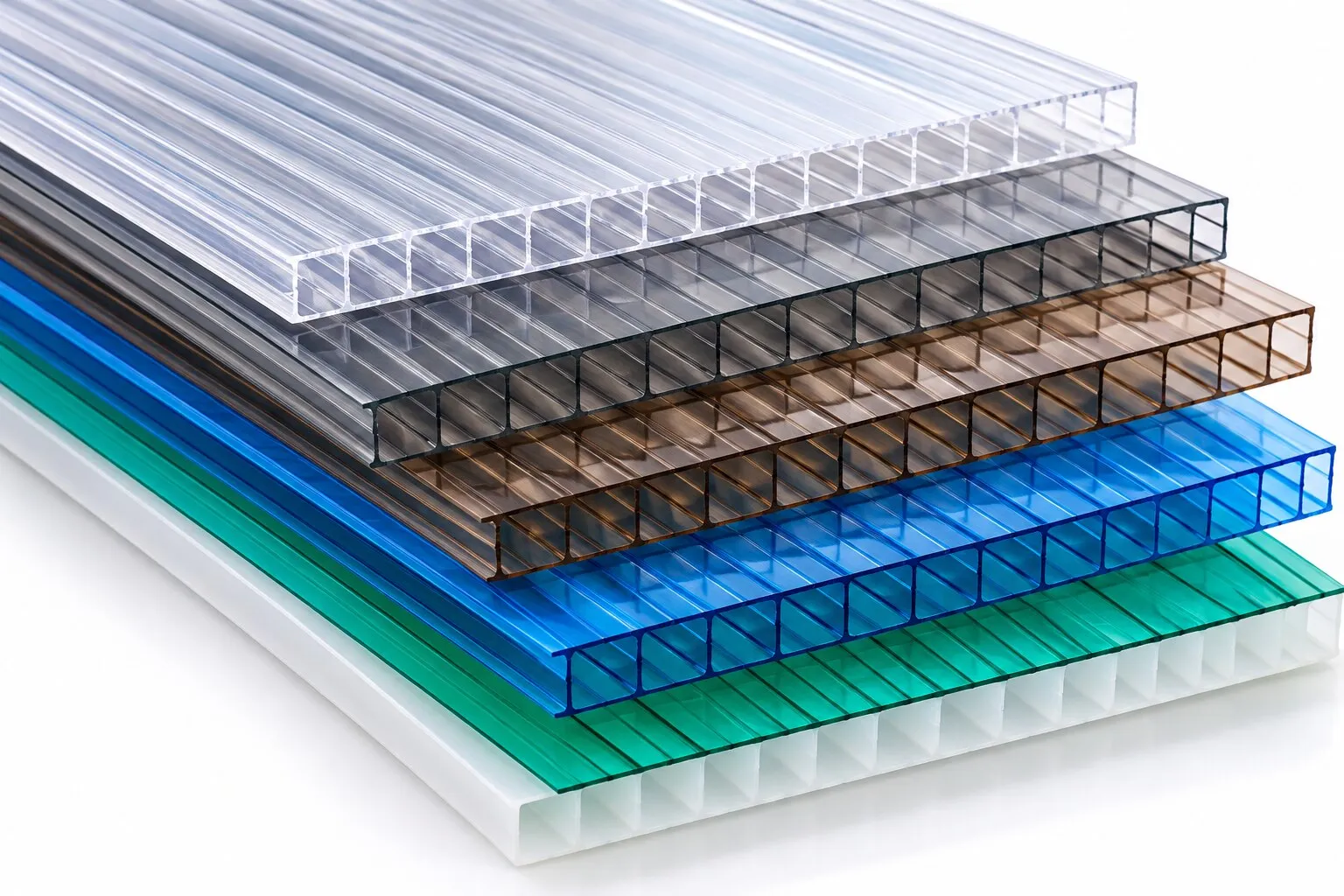
| Multiwall | Lowest weight and better insulation | Confirm bending limits, profile channels, and solid or vented closure tape; control condensation at open flutes |
| Solid | Continuous, easy-to-clean surface | Allow for greater weight and different fixing, expansion and bending details |
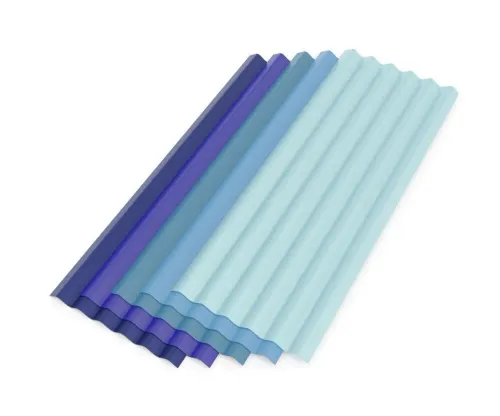
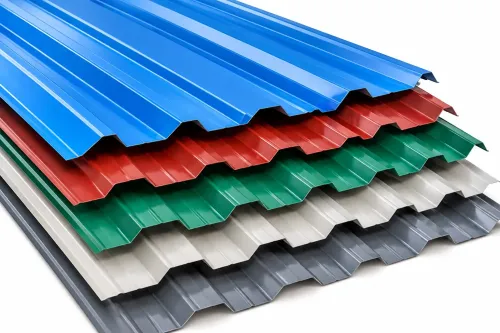
| Corrugated | Matches an existing profiled roof | Preserve rib shape, side-lap geometry, support spacing and fixing pattern |
| Colour-coated steel | Strong fire behaviour, durable and economical without daylight | Use where daylight is unnecessary; check corrosion protection and noise |
| Fibre-cement | Lower heat transfer and rain noise | Accept greater weight, brittle edges and careful handling |
| Acrylic | Daylight with different impact and weathering performance | Compare impact rating, UV stability and fixing details |
| Glass | Best cleaning and optical quality | Allow for high weight, breakage risk and installation cost |
Do not choose clear, opal, bronze, reflective or infrared-control grades by colour name. Request visible-light transmission and solar-heat-gain data: clear admits more daylight but raises heat below the roof, while solar-control grades reduce heat at the cost of daylight or colour rendering.
For every option, obtain the fire, smoke and permitted-use classification for the exact thickness, profile and installation assembly. Weather durability does not prove fire compliance. Multiwall ends need the specified closure system; sealing every flute with impermeable tape can trap condensation, while open flutes admit insects, dust and driven rain.
What must you measure and record before ordering replacement panels?
A replacement panel fits only when its profile, laps and fixing geometry match the existing roof—not merely its thickness. For polycarbonate sheets replacement requirements in Nagpur, record the following before ordering:
1. Photograph the roof from above and below. Record the profile, nominal and effective cover width, thickness, panel length, corrugation or rib geometry, panel colour and daylighting grade.
2. Measure purlin centres, support width, roof slope and fixing locations. Record screw diameter, washer type, fixing pattern, side lap, end lap and overlap direction.
3. Mark edge and corner zones separately from the roof field, then note where water travels during rain. Photograph ponding, blocked drainage, penetrations and failed lap seals.
4. Do not match thickness alone. A different rib shape can miss the purlin, fail to seat at the side lap or redirect water. Check wind uplift, edge-zone suction, panel geometry, support width, access loads and the manufacturer’s tested load tables.
5. Allow for Nagpur’s hot-sheet movement. Polycarbonate commonly expands 65–70 × 10⁻⁶ per °C; a 3 m sheet across a 50°C change can move roughly 10 mm. Preserve the specified clearance, end-lap movement and fixing-hole allowance instead of clamping the sheet rigidly.
Use this record to compare the existing roof with the supplier’s profile drawing and load data. If the slope, drainage or support spacing is wrong, a thicker panel will not cure the leak.
How should the replacement be installed and verified for Nagpur conditions?
Install the UV-protected face outward, allow thermal movement, and verify drainage before handover. Nagpur’s summer heat, strong solar radiation and June–September monsoon rain expose poor detailing quickly; a sound sheet can leak if slope, laps or gutters fail.
- Confirm the outward face from the printed UV marking, edge label, packaging or supplier data. Check the protective film’s orientation, fix the sheet, then remove the film promptly if the manufacturer requires it; exposed film can bake adhesive residue onto the surface.
- Drill the specified clearance holes and use the approved thermal washer or proprietary glazing profile. Tighten each screw only until the washer seals. Dimpling, crushed edges or radial cracks indicate over-tightening.
- Fit multiwall ends with the specified solid or vented closure tape and compatible profile. Open flutes admit dust, insects and driven rain; impermeable tape in the wrong location traps condensation.
- Check slope, gutter capacity, end closures, penetrations, side-lap seals and ponding with water before sign-off. Do not hide a drainage defect by choosing a thicker panel.
- Request the profile drawing, allowable service temperature, expansion allowance, visible-light transmission, solar-heat data, fire classification and chemical-compatibility instructions. These documents support polycarbonate sheets replacement requirements in Nagpur and polycarbonate sheets repair requirements in Nagpur.
RSR Steel Pvt. Ltd. is one Nagpur source from which to request matching documents; compare them with the installed roof, not with a catalogue description.
Related product
 | Polycarbonate Sheets RSR Steel Pvt. Ltd. offers premium-quality Polycarbonate Sheets known for their high strength, clarity, and durability. View product → |
Frequently asked questions
How do you inspect a damaged polycarbonate roof sheet in Nagpur?
Inspect from above and below, then classify each symptom as local damage, an installation defect or wider sheet failure. Check cracks, yellowing, brittleness, loose fixings, blocked drainage paths and leakage around overlaps.
When should you repair a polycarbonate sheet, and when should you replace it?
Repair isolated damage when the surrounding sheet remains clear, flexible and securely fixed. Replace the panel when cracks spread, the sheet has become brittle or hazy, fixing points have failed, or leakage indicates wider deterioration.
Which replacement sheet type and roofing material fits the repair?
Match the replacement to the existing profile, thickness, light-transmission needs, support spacing and roof function. Compare solid and multiwall polycarbonate with metal roofing where heat, daylight, impact resistance and service life differ.
What must you measure and record before ordering replacement panels?
Record the sheet profile, overall and effective cover width, length, thickness, overlap direction, support spacing, fixing locations, edge details and the required quantity. Photograph labels, laps and damaged fixing points.
How should the replacement be installed and verified for Nagpur conditions?
Install with the correct profile, compatible fasteners, sealing washers, end closures and expansion clearance. Verify panel alignment, lap direction, drainage, sealed penetrations and leaks after installation and after the first heavy rain.
Keywords